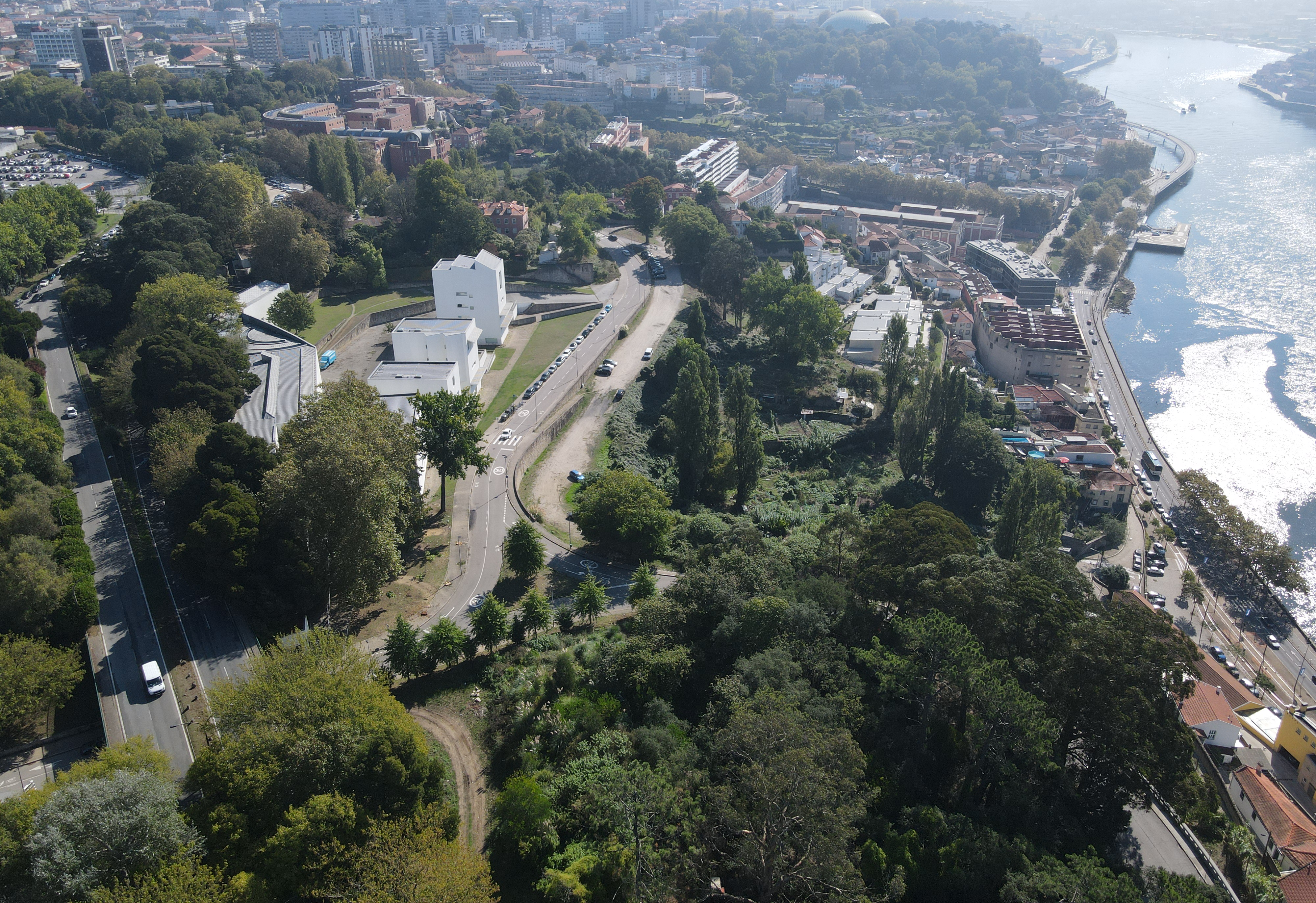
Drone photography: Carlos Fernandes, 2022
In 2019, UNESCO awarded the University of Porto, through FAUP, the Chair "Heritage, Cities and Landscapes. Sustainable Management, Conservation, Planning and Design".
This is the first UNESCO Chair granted to the University of Porto in the field of Cultural Heritage and was the outcome of a demanding evaluation by a team of international experts, following an application submitted by FAUP. The Chair’s core areas of activity include advanced education and training, research, knowledge transfer, and international cooperation.
The awarding of this Chair represents a significant recognition of the work developed over many years at FAUP and the Centre for Studies in Architecture and Urbanism (CEAU), in support of the safeguarding and enhancement of heritage as a resource and a driver for the qualified development of territories, cities, and landscapes.
As the name suggests, the Chair will focus on the management and conservation of cultural heritage, as well as on planning and design processes, with the aim of promoting high-quality contemporary intervention in heritage resources.
“It is not just about safeguarding cultural heritage, but also about adopting an operational approach to its enhancement and the construction of new heritage, understood as a vector for the sustainable development of cities, landscapes, and territories,” explains the coordination team.
This highlights the contribution of the discipline of Architecture as a promoter of interdisciplinary cooperation and the integration of preservation and development, through a critical and qualified approach (in education, research, and practice) to contemporary intervention in the built heritage.
Aligned with the Sustainable Development Goals of the UN’s 2030 Agenda, the Chair aims to develop innovative and sustainable practices in the management and enhancement of cultural heritage as a development resource.
The Chair also seeks to support the management and new nomination processes for World Heritage Sites in Portugal and internationally, especially in the context of North-South cooperation, including countries with heritage influenced by Portuguese culture (Africa, Asia, South America).
The project intends to serve as an open, participatory platform, promoting cooperation networks both nationally and internationally (NGOs, higher education institutions, public and private bodies, the UNESCO Chairs network, among others).
This Chair aligns with FAUP’s strategy of diversifying its educational offerings and consolidating scientific research excellence within national and international collaboration networks. At the same time, it continues the promotion of best practices in built heritage intervention, a tradition rooted in the work of FAUP’s renowned masters and carried on—both in teaching and practice—by their disciples.
Among a broad set of prior initiatives, noteworthy is the interdisciplinary training unit “Heritage and Landscape. Management, Analysis, Design”, coordinated by FAUP in collaboration with other U.Porto faculties (FLUP, FCUP, FEUP), as well as the organization of several research and dissemination events by CEAU in partnership with the Portuguese National Commission for UNESCO, ICOMOS-Portugal, local municipalities, and various public and private entities both nationally and internationally.
The initiatives developed under this Chair aim to contribute meaningfully to social engagement, reinforcing the role of heritage as a social construct intrinsically linked to community identity, appreciation, and recognition.
Cátedras UNESCO e Redes UNITWIN
Launched in 1992, the UNESCO UNITWIN Chairs Programme promotes cooperation and networking among universities worldwide, aiming to strengthen institutional capacities through knowledge sharing and collaborative work. The UNITWIN Network brings together over 700 institutions in 114 countries.
In Portugal, there are currently 13 UNESCO Chairs. At the University of Porto, alongside the new Chair “Heritage, Cities and Landscapes. Sustainable Management, Conservation, Planning and Design”, there is also the “Life on Land” Chair, active since 2017 and coordinated by the Research Centre in Biodiversity and Genetic Resources (CIBIO-InBIO), under the direction of Nuno Ferrand de Almeida, scientific coordinator of CIBIO-InBIO.
Objectives
The UNESCO Chair “Heritage, Cities and Landscapes. Sustainable Management, Conservation, Planning and Design” aims to promote an integrated system of research, training, information, and documentation in the areas of management, evaluation, planning, conservation, and sustainable design in the context of architectural heritage, cities, and landscapes.
It seeks to foster collaboration among researchers and professors of recognized merit in Portugal and internationally, particularly in Europe, Africa, the Asia-Pacific region, Latin America and the Caribbean, as well as in other parts of the world.
The specific objectives of this Chair are to:
- Provide undergraduate and postgraduate education and training in areas such as management, evaluation, planning, conservation, and sustainable design related to architectural heritage, cities, and landscapes, as well as in related topics. In addition, the Chair aims to empower students, cultural heritage managers, municipal technicians, and communities by offering participatory, inclusive, and innovative models of education and training;
- Develop interdisciplinary research on the themes of the UNESCO Chair in collaboration with partners and widely disseminate the outcomes of such research;
- Encourage informed debates, promote best practices, and share knowledge through conferences and publications, with the goal of turning results into action plans and conservation practices for World Heritage;
- Promote the implementation of the Recommendation on the Historic Urban Landscape, adopted by UNESCO in 2011;
- Support the preparation of new World Heritage nominations, particularly in Portugal;
- Actively cooperate with UNESCO and other UNESCO Chairs in relevant programs and activities.
Contacts
Phone: +351 226 057 100